Every brand posting on social media has asked the same question: why did one post reach thousands while the next barely moved? The answer sits inside the algorithms that decide what each person sees. The purpose of this guide is to explain how social media algorithms work in 2026, and what Instagram, TikTok and LinkedIn tend to reward, so UAE businesses can create content with a clearer sense of what helps and what does not. We will stay honest about one thing from the start: platforms do not publish their full formulas, so this guide relies on what they have said publicly and on well-observed patterns.
What a Social Media Algorithm Actually Is
An algorithm is not a single rule. It is a set of ranking systems, usually powered by machine learning, that predict how interested each person will be in each piece of content. A recommender system looks at a huge pool of possible posts and videos, then orders them for each user based on predicted interest. Two people opening the same app at the same moment see different feeds because their histories and behaviour differ.
Platforms build these systems to keep people satisfied and returning. This leads to a useful principle: algorithms generally reward content that people actually want to watch, read or share, and they penalise content that people skip or ignore quickly. Understanding this shifts your mindset from “how do I beat the algorithm” to “how do I make something worth a person’s attention”, which is a far more reliable approach, since the details change often.
The Signals Behind Most Algorithms
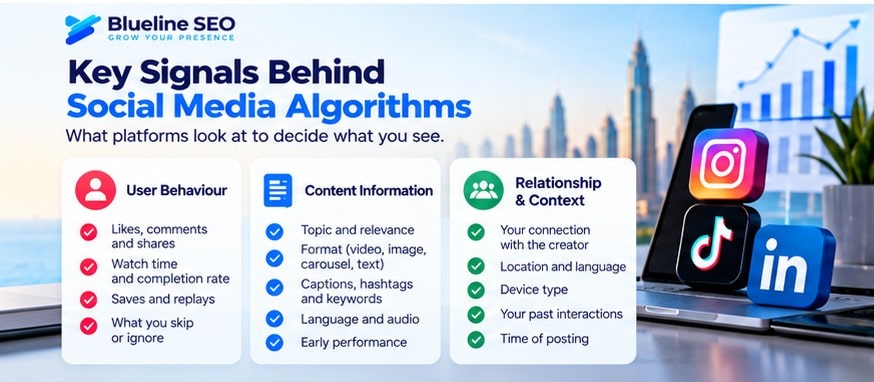
Although each platform has its own design, the underlying signals fall into a few families. The first is user behaviour: what the person has liked, watched, commented on, saved, shared or skipped before. The second is content information: the topic, format, caption, audio, language and how people have responded to it so far. The third is relationship and context: how closely connected you are to the creator, your location, language and the type of device you use.
Within behaviour, platforms increasingly weight signals that show real interest over passive ones. Watching a video to the end, replaying it, saving it for later or sending it privately to a friend tells the system more than a quick tap on a like button. Early performance also matters, because a post is often shown to a small test audience first, and strong reactions from that group can lead to wider distribution. This is why the first hours after posting, and the quality of the hook in the first seconds, carry so much weight.
How the Instagram Algorithm Works in 2026
Instagram does not have one algorithm. It uses different ranking systems for Feed, Stories, Explore and Reels, and the company explains this in its post on how Instagram ranking works. In general, the system looks at your activity, information about the post, information about the person who posted it and your past interactions with that person.
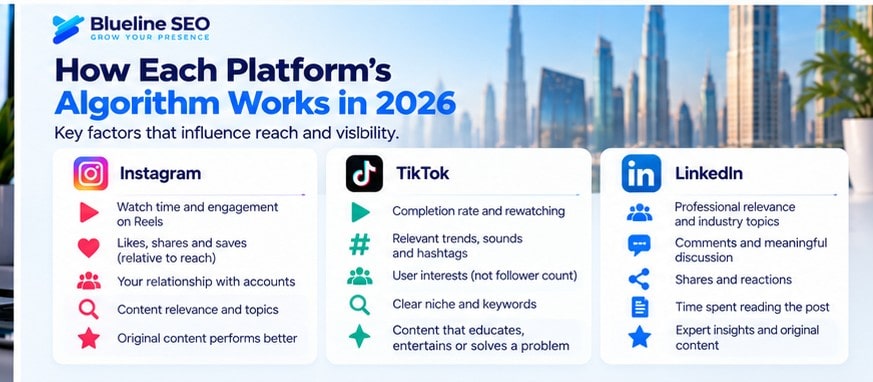
For Reels and discovery, Instagram’s leaders have publicly pointed to signals such as watch time, how often people like a Reel relative to how many see it, and how often people send it to others. Shares sent privately are widely seen as a strong sign that content is valuable. For Feed and Stories, relationships matter more, so accounts you interact with regularly appear more often.
In practical terms, UAE brands do well by creating Reels with a strong first second, clear value and a reason to share, such as a useful tip, a local insight or a relatable moment. Original content is generally favoured over reposted material, and consistent engagement with your community through replies and stories helps strengthen relationships with followers. Local lifestyle media such as Lovin Dubai are a good place to see what kinds of city-focused stories and formats resonate with UAE audiences. Remember that Arabic and English audiences may respond differently, so test both rather than assuming.
How the TikTok Algorithm Works in 2026
TikTok’s For You feed is built around interest rather than follower count, which is why small accounts can still go viral. TikTok explains its approach in its post on how it recommends videos for you. The system considers user interactions such as likes, shares, comments and watch behaviour, video information such as captions, sounds and hashtags, and account and device settings such as language and location.
Each video is typically tested with a small group, and if viewers respond well, it is shown to progressively larger groups. Completion rate and rewatching are important, so shorter, tightly edited videos often perform better than slow openings. Sound and trends can help discovery, but only when they fit your message naturally. Forcing a trend that does not suit your brand usually brings views without customers.
For businesses, the lesson is to focus on a clear niche and speak directly to a specific audience. A Dubai dental clinic explaining common myths about whitening will likely do better with the right viewers than a generic, polished brand video. Educational, behind-the-scenes and storytelling formats tend to work well, and because TikTok is search-like, adding clear spoken and written keywords in your video helps people find it.
How the LinkedIn Algorithm Works in 2026
LinkedIn behaves differently because its purpose is professional. The feed tries to show content that is relevant to a person’s work, industry and interests, and that is likely to start meaningful conversation. LinkedIn generally tests a post with a small portion of your network, checks how people respond, and expands distribution when the reaction is strong. Signals often cited include time spent reading, thoughtful comments and shares, while low-quality engagement bait tends to be discouraged.
Content that performs well on LinkedIn is typically useful and specific: lessons from real projects, clear opinions backed by experience, short case studies and answers to questions your target buyers ask. Posts from people often reach further than posts from company pages, so encouraging employees and leaders to share their expertise can extend your reach. Document posts, text posts and videos can all work, so the better question is whether a post offers real insight to a particular professional audience.
Comparing the Three Platforms
| Factor | TikTok | ||
|---|---|---|---|
| Main discovery driver | Interests and relationships | Interests, regardless of followers | Professional relevance and network |
| Key engagement signals | Watch time, shares, saves, likes | Completion rate, rewatches, shares | Reading time, comments, meaningful reactions |
| Best content for brands | Reels, carousels, stories | Short educational or story-led videos | Insights, case studies, thought leadership |
| Follower count matters | Moderately | Less | Moderately, with network quality |
| Posting rhythm | Consistent, quality-focused | Frequent testing | Steady, relevant posting |
| Typical UAE use | Lifestyle, retail, food, property | Youth reach, local creators | B2B, recruitment, services |
Turning Algorithm Knowledge Into a Plan
The most dependable response to algorithm changes is a strong foundation. Know your audience and goals, create content around real customer questions, test formats and review results monthly. Treat any single trick with caution, because platforms update their systems often. Marketing trade media such as Campaign Middle East and Communicate Online report on platform changes and how regional brands respond, which makes them handy for staying current. Our guide to a social media marketing strategy for UAE businesses service approach explains how professionals plan this, and you can see local options for Dubai and Abu Dhabi.
Social media also works better when it supports the rest of your marketing. Send traffic to a fast, well-built site through good web development, support discovery with SEO, and compare channel returns in SEO vs Google Ads in Dubai. Remember that organic growth takes time, as explained in how long SEO takes to work in the UAE, and avoid the habits listed in the top SEO mistakes in UAE businesses, many of which apply to social media as well.
Frequently Asked Questions
How do social media algorithms work?
They use machine learning to predict what each person will find interesting, based on behaviour, content details and relationships, then rank content accordingly.
Do algorithms favour posting more often?
Not by itself. Quality and relevance matter more than volume, though consistent posting helps you learn what works.
What matters most on Instagram in 2026?
Strong Reels with high watch time and shares, original content and genuine interaction with your community are widely seen as important.
Can small accounts go viral on TikTok?
Yes. TikTok recommends videos by interest, so a new account can reach large audiences if viewers respond well.
Why do some LinkedIn posts reach fewer people?
Posts that feel promotional, generic or like engagement bait often get less distribution than useful, specific content that sparks real discussion.
Should I change my strategy every time an algorithm updates?
No. Focus on audience value and consistent testing. Small updates rarely change what makes good content.
Conclusion
Knowing how social media algorithms work will not give you a secret formula, but it does give you a sensible direction: create content people truly want, make it easy to watch and share, build genuine relationships and measure what happens. Each platform has its own character, so adapt your approach to Instagram, TikTok and LinkedIn separately. For help building a plan for your brand, contact the BlueLine SEO team.